Taxonomy, the Scientific Classification of All Life, Simply Explained

And of all life, past and present.
The Taxonomic Classification of Man.
And all the life-forms we have ever known.
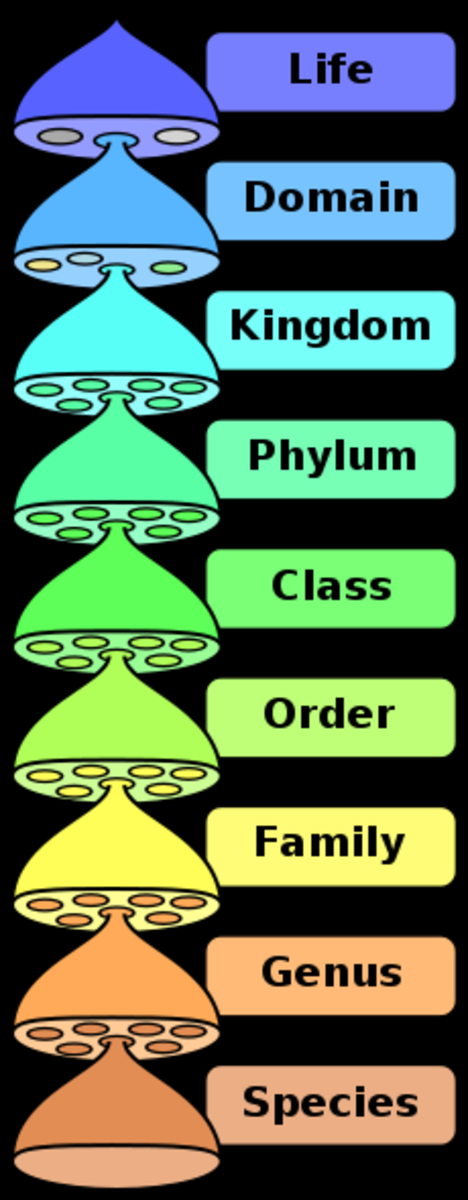
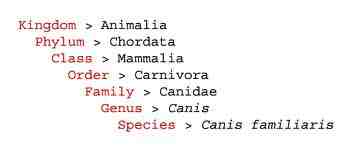
1) Kingdom 4) Order 7) Species
2) Phylum 5) Family
3) Class 6) Genus
Most of you bright and informed Hubbers will know that Taxonomy has little to do with governments stealing our hard earned shekels, but describes a system of classifying the myriads of creatures who have come and gone, or still inhabit, our planet.
Taxonomy has been made extremely complicated by the addition of many layers and sub-layers of classification, used by scientists, which have muddied the waters of the clear system invented by the Swedish botanist, Carl Von Linne (Ltn. Linnaeus), way back in the Eighteenth Century. No doubt they could give us good reasons for what they have done, but his has put the assimilation of taxonomy beyond the layman and into the realm of the expert only, perhaps the situation the scientific community was seeking.
I will seek in this short article to clarify some of the mystery and explain just what the whole process involves, with the emphasis on our own classification and using just the traditional methods without all the extra “layers” found indispensable by today’s scientists. (They are mentioned in lowercase).
Kingdom
. First, come the Kingdom. You, your dog and cat and all the other diverse animals all belong to the Animal Kingdom, (Animalia), containing billions upon billions of life forms stretching back more than 500 million years right up to today, 2010. Other kingdoms are the Plants, Fungi, Protozoa and Bacteria. Most of what we know about extinct life we have gleaned from the fossil record and much more must be lost, probably forever, unless we can one day invent a real world Tardis and go back to the beginning of time - of life - and have a look.
Here, the boffins have injected a sub-kingdom, but we will pass on to the next stage in our consideration today:
Phylum
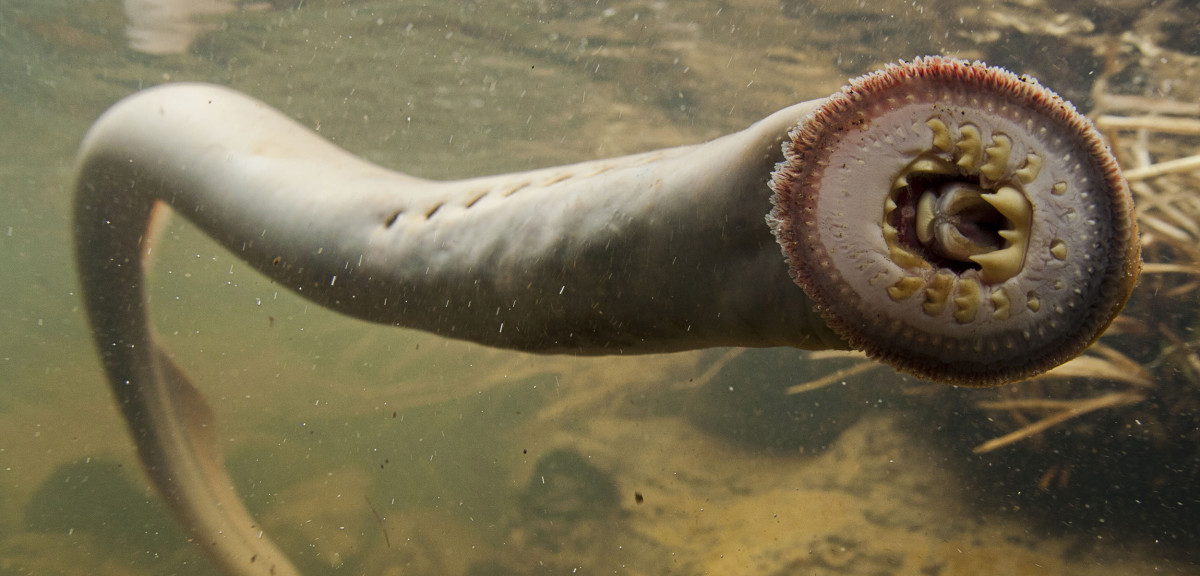
. In general terms, the phyla are a group of creatures which show a certain degree of development. Our phylum is “Chordata, which contain all vertebrates (having a spinal column), as well as a couple of anomalies, such as the lamprey, a strange sucker fish.
There are 36 phyla, nine of which include 96% of all life. Two of these, the Mollusca (shellfish) and the Arthropoda (insects, arachnids, etc) are the two largest grouping.
The brainiacs have put in two more subclasses here, the sub-phylum and the super-class, but we shall descend abruptly, leaving them to mutter, to the:
Class
. Here, we find the ranks further divided into characteristics which separate them from the general pyhla for that species. For example, man’s phylum, Chordata, is broken down into birds, reptiles, amphibians and mammals (and several others). Then there are reptilia, aves (birds) amphibia and agantha (fish, etc.)
Here, we skip no less than three other sub-chapters dear to the eggheads: sub-class, infra-class and super-order, and journey comfortably to:
Order.
Here, we break down the larger classes into smaller groups, mammalia includes mice, rats, etc., etc., primates include old and new world primates, as well as you and me, the “super apes“ who we shall concentrate on from now. Also here are the carnivora, rodentea, marsupial, catacea (whales, etc.) and a dozen more,
Jumping again the complicating suborder, infra-order and super- family, we land on the next taxonomic grouping concerned in this hub:
Family.
This is the level most understood by laymen as it is the one where man appears clearly, although we are still hanging with our brothers, the primates, in the family Hominidae. Others include Pongidae (Orang-utans), Cebidae (monkeys) and about 8 more.
Nearly home now, as we jump down to:
Genus
. Ignoring sub-family and tribe, we separate from other apes, etc., here, becoming Homo , Pan, (Chimps), Gorilla, (merely Gorilla…one tore the head off an anthropologists attempting to call his genus Kong!). The last member of this grouping is Australopithecine (man) now extinct of course.
From here, we go down to the last taxa used to classify life: Species. Preceded by sub-genus and followed by sub-species; in the later additional classifications, the last probably included in the anticipation of football hooligans and other worthy sociopaths.
The Species, as far as man is concerned, includes Neanderthal Man, Erectus, Habiles and man as we know him today, Homo sapiens, or the “man who thinks“, (he appeared briefly in the taxonomic record 400,000 years ago, but I guess conditions were not quite right).
Please excuse this article as that in striving for simplicity, I have missed out much of what can be seen in any scientific article or journal.
Notes:
For those who would like to know all the classifications used today (with more contemplated) here we go:
Kingdom, Subkingdom, Phylum, Subphylum, Superclass, Class, Subclass, Infraclass, Superorder, Order, Suborder, Infraorder, Superfamily, Family, Subfamily, Tribe, Genus, Subgenus, Species, Subspecies. Perhaps they did it to create more niches for their boffins!